
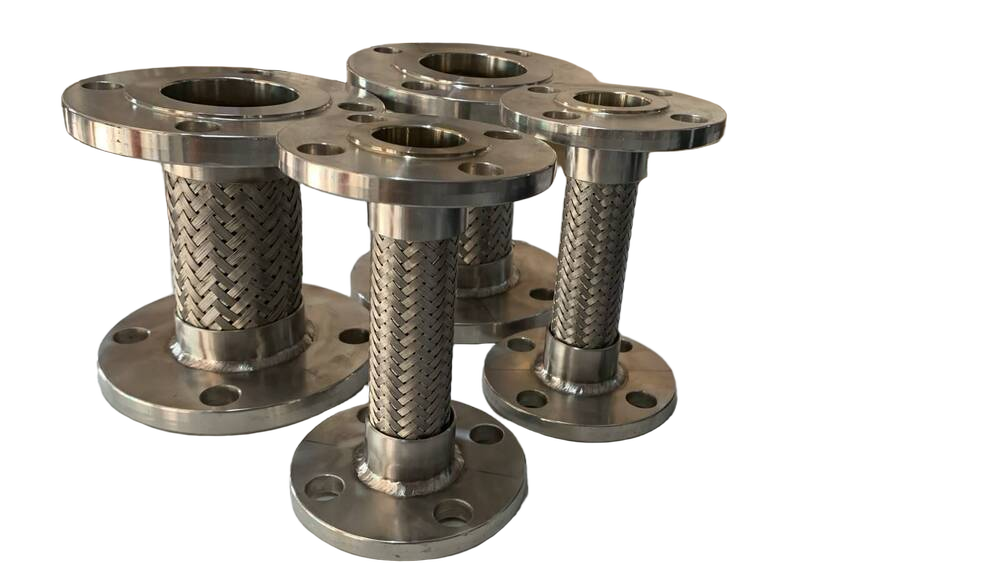
SS Flexible Hose Pipe
Product Details:
X
SS Flexible Hose Pipe Price And Quantity
- 1 Unit
SS Flexible Hose Pipe Trade Information
- Cash in Advance (CID), Cheque
- 10000 Unit Per Week
- 1 Days
- Contact us for information regarding our sample policy
- , All India, South India, Central India, West India, North India, East India, Gujarat, Karnataka, Kerala, Lakshadweep, Mizoram, Meghalaya, Manipur, Andhra Pradesh, Bihar, Chandigarh, Daman and Diu, Goa, Jharkhand, Odisha, Punjab, Assam, Delhi, Dadra and Nagar Haveli, Andaman and Nicobar Islands, Arunachal Pradesh, Chhattisgarh, Haryana, Himachal Pradesh, Jammu and Kashmir, Madhya Pradesh, Maharashtra, Nagaland, Rajasthan, Sikkim, Tamil Nadu, Telangana, Tripura, Pondicherry, Uttar Pradesh, Uttarakhand, West Bengal
Product Description
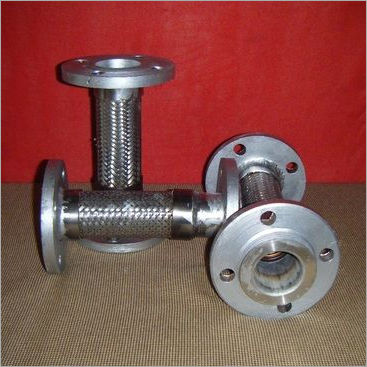
SS Flexible Hose Pipe is a high-performance flexible metal hose designed for the safe transfer of liquids, gases, steam, oil, chemicals, and other industrial media under demanding operating conditions. It is generally manufactured with a corrugated stainless steel inner hose and stainless steel wire braiding, which provides flexibility, pressure resistance, vibration absorption, and mechanical protection.
Available in stainless steel grades such as SS 304, SS 316, SS 316L, and SS 321, the hose can be supplied with different end connections, lengths, diameters, and braid configurations according to application requirements.
The corrugated construction allows the hose to accommodate movement and vibration while the external stainless steel braid improves pressure capability and prevents excessive expansion. SS flexible hoses are widely used in chemical, petrochemical, pharmaceutical, food processing, oil & gas, power generation, HVAC, boiler, hydraulic, and general industrial applications.
Key Features
- Corrugated stainless steel construction
- SS 304 / SS 316 / SS 316L / SS 321 options
- Single or double stainless steel wire braiding
- Excellent flexibility and movement absorption
- High resistance to corrosion
- Suitable for high-pressure applications
- Suitable for high-temperature service
- Excellent vibration and shock absorption
- Available with customized end connections
- Suitable for gases, liquids, steam, oil and chemicals
- Long service life with proper installation and maintenance
Technical Specifications
| Parameter | Typical Specification |
|---|---|
| Product | SS Flexible Hose Pipe |
| Hose Construction | Corrugated stainless steel hose |
| Braid | SS 304 / SS 316 / SS 316L wire braid |
| Material Grades | SS 304, SS 316, SS 316L, SS 321 |
| Hose Type | Corrugated / Braided Flexible Metal Hose |
| Braid Configuration | Single or Double Braid |
| Size Range | Approx. 1/4" to 12" and above, depending on design |
| Pressure Rating | Application-dependent; can range from low to high pressure |
| Temperature Range | Application-dependent; special constructions can handle extreme temperatures |
| End Connections | Threaded, BSP, BSPT, NPT, flanged, welded, union, etc. |
| Length | Standard or customized |
| Media | Water, steam, gas, oil, chemicals, air and other compatible fluids |
| Application | Industrial, chemical, HVAC, hydraulic, pharmaceutical, food, oil & gas, power |
| Testing | Hydrostatic / pneumatic / other tests as specified |
| Standard | EN ISO 10380 or applicable customer/industry specification |
Actual pressure and temperature ratings should always be selected according to hose size, material grade, braid configuration, end fittings, media, and operating conditions. For example, published manufacturer data for single-braid corrugated hoses shows working pressures decreasing as bore size increases.
Advantages of SS Flexible Hose Pipe
1. Excellent Corrosion Resistance
Stainless steel construction provides strong resistance to rust and corrosion, making the hose suitable for demanding industrial environments and many chemical applications.
2. High Pressure Resistance
The stainless steel wire braid reinforces the corrugated hose and helps it withstand internal pressure while limiting hose expansion. Single- and double-braid constructions can be selected according to pressure requirements.
3. High Temperature Capability
SS flexible hoses are suitable for applications involving hot fluids, steam and elevated operating temperatures. The exact temperature rating depends on the material, hose construction, fittings and service conditions.
4. Vibration Absorption
The flexible construction helps absorb vibration generated by pumps, compressors, engines and other rotating equipment, reducing mechanical stress on connected piping.
5. Thermal Expansion Compensation
Flexible metal hoses can accommodate movement caused by thermal expansion and contraction, helping reduce stress on rigid piping systems.
6. Flexible Installation
The corrugated design makes installation easier in confined areas and helps accommodate movement or minor misalignment between connected equipment.
7. Long Service Life
Stainless steel provides good mechanical strength, corrosion resistance and durability, allowing the hose to perform reliably in demanding environments when correctly selected and installed.
8. Wide Range of Applications
SS flexible hoses can be used for transferring water, steam, gases, oils, chemicals and other compatible media across many industrial sectors.
Common Applications
- Chemical and petrochemical plants
- Oil & gas industries
- Steam and boiler lines
- Hydraulic and pneumatic systems
- HVAC systems
- Power plants
- Pharmaceutical industries
- Food and beverage processing
- Water treatment plants
- Refineries
- Gas lines
- Pump and compressor connections
- Industrial process piping
- Automotive applications
- Thermal equipment
SS Flexible Hose Pipe FAQ
Q1. What is an SS Flexible Hose Pipe?
An SS Flexible Hose Pipe is a flexible metal hose generally manufactured from corrugated stainless steel and reinforced with stainless steel wire braid. It is used for transferring fluids or gases and for absorbing vibration, movement and thermal expansion.
Q2. What is the difference between SS corrugated hose and SS braided hose?
An SS corrugated hose refers primarily to the corrugated metal tube. An SS braided hose normally consists of the corrugated stainless steel tube plus an external stainless steel wire braid. The braid increases pressure resistance and provides additional mechanical protection.
Q3. Which SS grade is best for flexible hose?
SS 304 is widely used for general industrial applications, while SS 316/316L is often preferred where greater corrosion resistance is required. SS 321 can be selected for certain elevated-temperature applications. The correct grade should be selected based on the fluid, temperature, pressure and surrounding environment.
Q4. Can SS flexible hose be used for steam?
Yes. Stainless steel flexible hoses can be used for steam applications when the hose construction, pressure rating, temperature rating and end connections are appropriately selected.
Q5. Can SS flexible hose be used for chemicals?
Yes, but chemical compatibility must be checked before selection. The appropriate stainless steel grade, hose construction, fittings and operating conditions depend on the specific chemical and its concentration and temperature.
Q6. What pressure can an SS flexible hose withstand?
There is no single pressure rating for all SS flexible hoses. It depends on bore size, wall thickness, braid configuration, material and construction. For example, published single-braid specifications range from approximately 110 bar for a 6 mm bore to 10 bar for a 150 mm bore in one manufacturer's EN ISO 10380 product range.
Q7. What end connections are available?
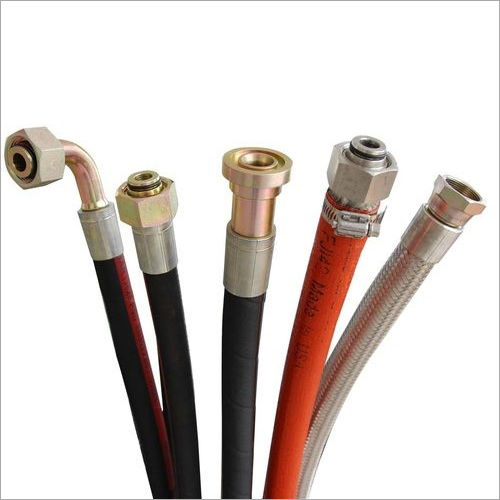
Common options include BSP, BSPT, NPT, threaded fittings, flanges, unions, welded ends, camlock and other customized connections, depending on the application.
Q8. What is the difference between single braid and double braid?
A single-braided hose is generally suitable for moderate pressure requirements, while a double-braided hose provides additional reinforcement for applications requiring higher pressure capability. The actual rating must be confirmed from the manufacturer's technical specification.
Q9. Can SS flexible hose absorb vibration?
Yes. Flexible metal hose assemblies are commonly used to absorb vibration from pumps, compressors, generators and other equipment, helping reduce stress transmitted to rigid piping.
Q10. Can SS flexible hose be customized?
Yes. SS flexible hoses can typically be customized according to diameter, length, material grade, braid type, pressure requirement and end connection.
Q11. How do I select the correct SS flexible hose?
The main parameters to provide are:
- Hose size / internal diameter
- Hose length
- Operating pressure
- Operating temperature
- Fluid or gas being conveyed
- Material grade requirement
- Static or dynamic application
- Required bend radius
- End connection type
- Required testing or certification
Correct selection of these parameters is important for safe and reliable operation.
Q12. Is SS flexible hose better than rubber hose?
Neither is universally better. SS flexible hose is particularly advantageous for applications involving high temperature, pressure, corrosion, vibration or demanding industrial service, while rubber hoses may be more economical and suitable for other applications. Selection should be based on the actual operating conditions.
Tell us about your requirement

Price:
Quantity
Select Unit
- 50
- 100
- 200
- 250
- 500
- 1000+
Additional detail
Mobile number
Email

Other Products in 'Hydraulic Flexible Hose Assemblies' category



Contact Details

- Office No. 10, Gajanand Avenue, Shivaji Chowk, Baranpura, Vadodara - 390001, Gujarat, India
- Phone : 08045802486
SHIVANI TRADERS
GST : 24AANFS1508C1ZK
GST : 24AANFS1508C1ZK

- Mr Jayesh A. Pandya (Partner)
- Mobile : 08045802486
-
 Send Inquiry
 Send Inquiry
 Send Inquiry
 Send SMS

SHIVANI TRADERS
All Rights Reserved.(Terms of Use)
Developed and Managed by Infocom Network Private Limited.
Developed and Managed by Infocom Network Private Limited.

